
RAS-50 / RAS-70
Spar Cap & Edge Inspection
Gantry and portable scanning for spar caps, leading and trailing edges
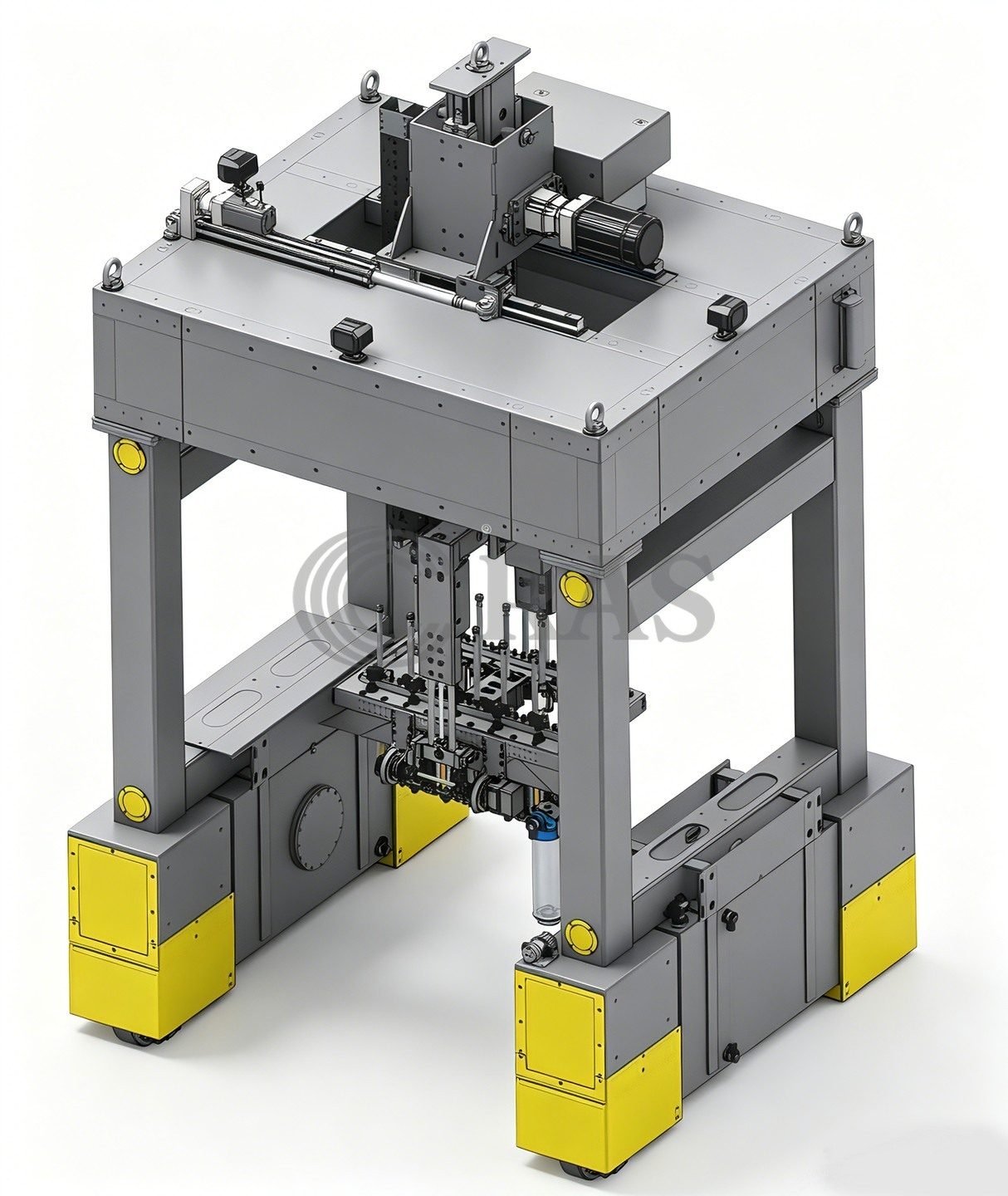
A blade is not inspected by one machine. The main and auxiliary beams are covered by a scanner running along the shell, but the pultruded carbon cap arrives as a separate part, and the leading and trailing edge bond lines sit where a beam scanner cannot reach. Those two regions are where the two machines on this page work.
The spar cap gantry straddles the rack rather than the blade. A 25- or 31-probe array spans the full chord, so the cap is covered in one pass and the reviewer gets a single image instead of a stitch of two-metre files. Constant-force pressure keeps the head coupled across the cap without marking it, most of the couplant is recovered, and the frame needs only 0.4 m of clearance on each side.
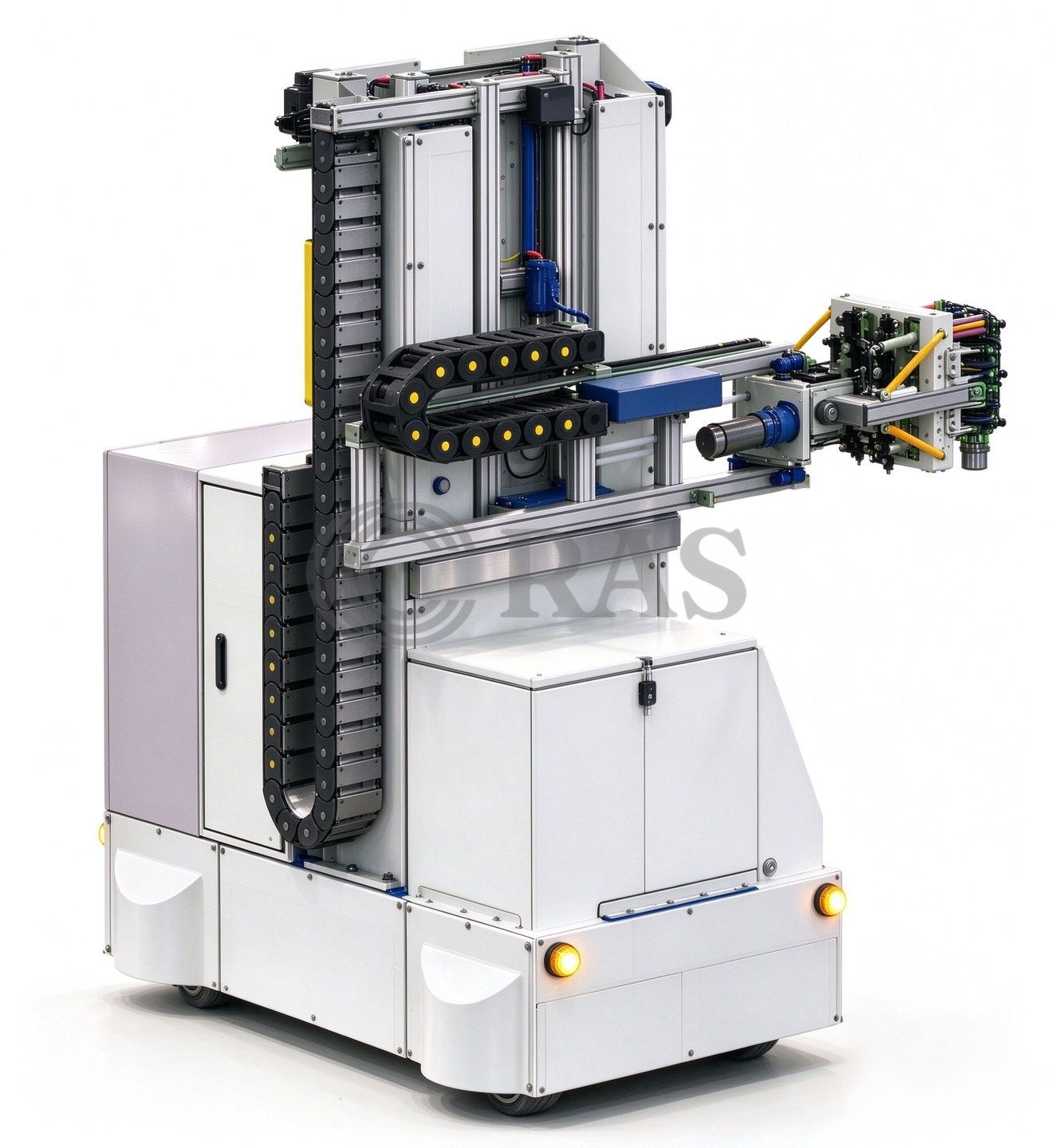
The edge unit is the opposite shape: small, battery-powered and single-operator, built to follow the leading and trailing edge bond line after demoulding. Both machines feed the same review software as the beam scanners, so the three scans of one blade land in one defect list.
Specifications
- Spar cap coverage
- Full chord in one pass
- Probe count
- 25 / 31 (phased array)
- Clearance each side
- 0.4 m
- Spar cap runtime
- 2 caps per battery charge
- Edge coverage
- Leading and trailing edge
- Edge runtime
- 4 blades per battery charge
- Operation
- Single operator
- Pressure control
- Constant-force probe linkage
Key capabilities
Gantry over the rack
The frame straddles the spar rack and needs only 0.4 m of clearance on each side, so spar caps are inspected where they are stored instead of being moved to a cell.
Full chord, one pass
A 25- or 31-probe phased array spans the whole chord, which removes the two-metre image stitching that hand-held scanning forces on the reviewer.
Constant force, dry floor
Probe pressure is regulated and most couplant is recovered by the unit, so the head stays coupled without leaving water under the rack.
Frequently Asked Questions
Why inspect spar caps separately from the blade?
+
A pultruded carbon cap is made before it is bonded into the shell. Inspecting it at that stage keeps a defect out of the moulding hall entirely, where the cost of finding it is a whole blade rather than one component.
How much floor space does the gantry need?
+
0.4 m on each side of the spar rack. The frame travels along the cap, recognises its boundary and scans autonomously, so the operator watches the image rather than steering the machine.
What does the edge unit cover?
+
The leading and trailing edge bond regions, which fall outside the main and auxiliary beam scan. It is deliberately small and needs no working at height, and one battery charge covers the edges of four blades.
Are the two machines using the same software?
+
Yes. Both write into the same acquisition and review application as the blade scanners, so a spar cap, an edge and a main beam end up in one report format and one defect list.
Can the edge unit be used inside the mould?
+
It is a floor-standing unit rather than a mould-mounted one. It is used after demoulding, along the bond lines, where a hand-held roller probe would otherwise be the only option.